Sugar Cravings in Menopause: Why They Hit and What Helps
By the Wellnyra Editorial Team · Published November 10, 2026 · Updated November 13, 2026 · This article is for general information and is not medical advice. How we write.
Quick answer
Sugar cravings often get stronger in perimenopause and menopause. One study that followed women for 5 years found that hunger and the desire to eat rose during the transition and stayed higher afterward. Poor sleep, stress and skipped meals add fuel. Eating breakfast, sleeping better and tracking your triggers help. Constant hunger with thirst and frequent urination is a reason to get your blood sugar checked.
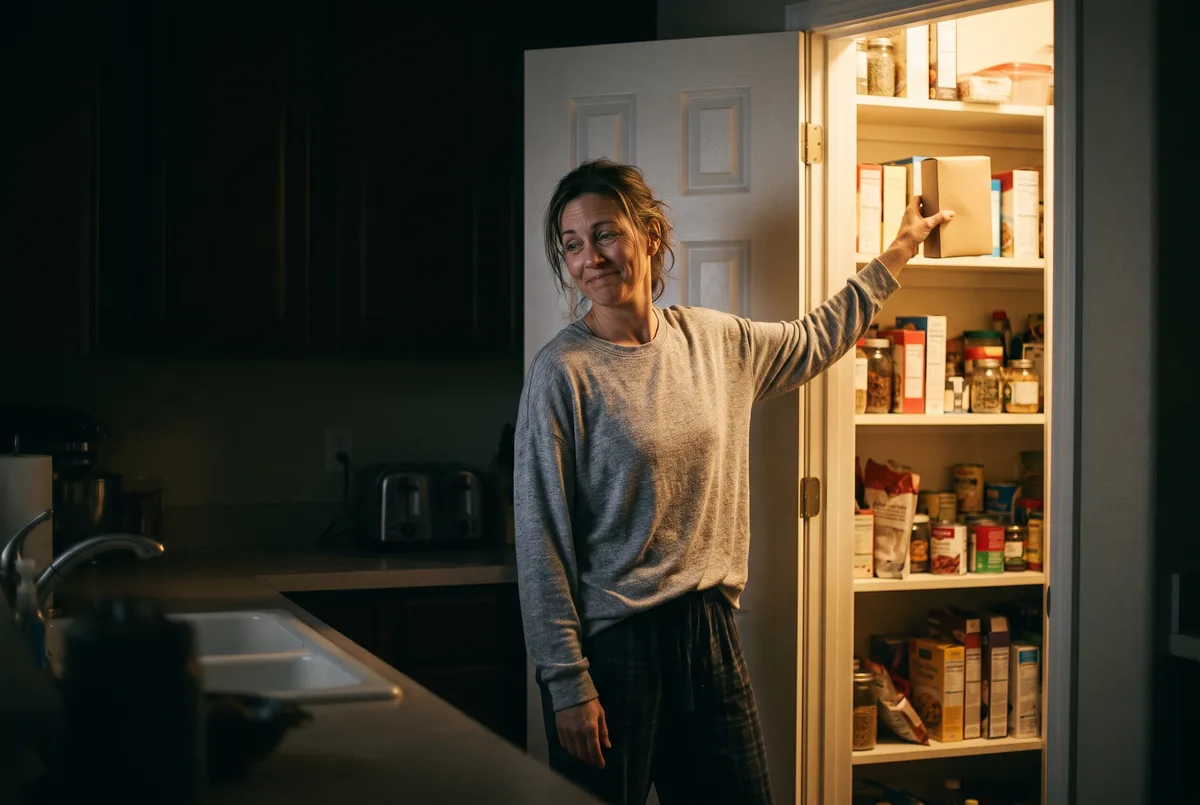
It's 9 p.m., you ate a decent dinner, and you're standing in the kitchen looking for something sweet. A few years ago this didn't happen. If that sounds familiar, there's a real reason behind it, and you have more control over it than it feels like right now.
In this article
- Is it really menopause? What studies show
- The everyday triggers that make it worse
- Why cravings hit hardest at night
- Find your triggers: a 2-week log
- What helps, according to research
- Does hormone therapy help cravings?
- Could it be diabetes or a thyroid problem?
- When to talk to your doctor
- Frequently asked questions
1. Is it really menopause? What studies show
You'll read a lot of confident explanations online. Here's what's actually been measured, and what's still a theory.
What's been measured: a Canadian study followed 94 women for 5 years, starting before menopause. As they went through the transition, their hunger and desire to eat went up and stayed higher after menopause, and they felt less full in the morning. Interestingly, the amount they actually ate went down over the same years (Duval et al., 2014). So the urge to eat is real, even when you're not overeating.
What's likely, but less proven: sex hormones seem to affect taste. In a small study of 20 younger women, the preference for sweet tastes was higher in the second half of the menstrual cycle, when progesterone is higher, than in the first half (Malo-Vintimilla et al., 2023). In perimenopause, cycles become irregular and hormones swing more. It makes sense that cravings would swing too, but that hasn't been tested directly in midlife women.
What's mostly theory: claims that cravings come from low serotonin, a "magnesium deficiency" or the "cortisol curve" are everywhere, usually with no study in women in menopause behind them. We're not repeating them.
2. The everyday triggers that make it worse
Hormones load the dice, but daily habits often pull the trigger.
Poor sleep
In a brain-scan study, one night without sleep turned down activity in the parts of the brain that weigh food choices and turned up activity in the amygdala, a more impulsive, reward-driven area. People also wanted high-calorie foods more, and the worse they felt their sleep loss was, the stronger the pull (Greer et al., 2013). With night sweats and 3 a.m. wake-ups, this is a big one in menopause. Our guide to menopause sleep and weight gain covers it in depth.
Stress
In a lab study of 59 women, those whose cortisol rose the most during stress ate more calories after a stressful task, and they ate more sweet food overall (Epel et al., 2001). The women were premenopausal, but midlife often brings more of exactly this kind of stress: work, teenagers, aging parents.
Skipped meals
Skipping breakfast or eating a tiny lunch can backfire later in the day. In a small trial, eating breakfast reduced cravings for both sweet and savory foods compared with skipping it (Hoertel et al., 2014). More on that below.
Alcohol
A glass of wine can feel like it helps you unwind and sleep. But alcohol disrupts the second half of the night (Ebrahim et al., 2013), and a worse night sets up a hungrier, more craving-prone next day. It's also usually paired with snacking.
3. Why cravings hit hardest at night
Evening is when several triggers stack up: you're tired, your willpower has been used all day, dinner may have been light on protein, and the kitchen is right there. If you also skipped breakfast or sat through a stressful afternoon, the pull for something sweet at 9 p.m. is no surprise.
A few things that make evenings easier (these are practical tips, not studied treatments):
- Plan your evening treat instead of fighting it. A small, portioned dessert after dinner beats grazing out of the bag.
- Close the kitchen after dinner: lights off, teeth brushed, a cup of herbal tea in another room.
- Check in with yourself. Hungry, tired, bored or stressed? Each one has a different fix.
4. Find your triggers: a 2-week log
Everyone's mix is different. Two weeks of quick notes will show you yours. Each day, write down when a strong craving hit, what you wanted, and what was going on.
| If cravings show up... | The likely trigger | Try this first |
|---|---|---|
| After a bad night | Short sleep | Work on sleep first |
| Mid-morning, on days you skip breakfast | Skipped meal | A breakfast with protein |
| After a stressful meeting or call | Stress | A 5-minute walk or break before you eat |
| The day after drinking | Alcohol and broken sleep | Fewer drinks, earlier in the evening |
| In the days before your period | Hormone swings | Plan for it: regular meals, a planned treat |
| All the time, with thirst and trips to the bathroom | Possibly blood sugar | Ask your doctor for a blood test |

5. What helps, according to research
Eat breakfast, with some protein
In a small randomized trial, young women who usually skipped breakfast tried three patterns for 6 days each: no breakfast, a normal breakfast (13 g of protein) and a high-protein breakfast (35 g). Both breakfasts reduced cravings for sweet and savory foods compared with skipping. The high-protein version tended to do a bit better on savory cravings, though that difference wasn't statistically clear (Hoertel et al., 2014).
It was a pilot study in 19-year-olds, not women in menopause, so take it as a strong hint. But the takeaway is simple: don't skip breakfast, and build it around eggs, Greek yogurt, cottage cheese or similar.

Protect your sleep
If your log shows cravings after bad nights, sleep is the lever to pull first. The brain-scan study above suggests that a tired brain is wired to want high-calorie food. Better sleep won't erase cravings, but it takes away one of the strongest pushes.
Know how much sugar you're actually eating
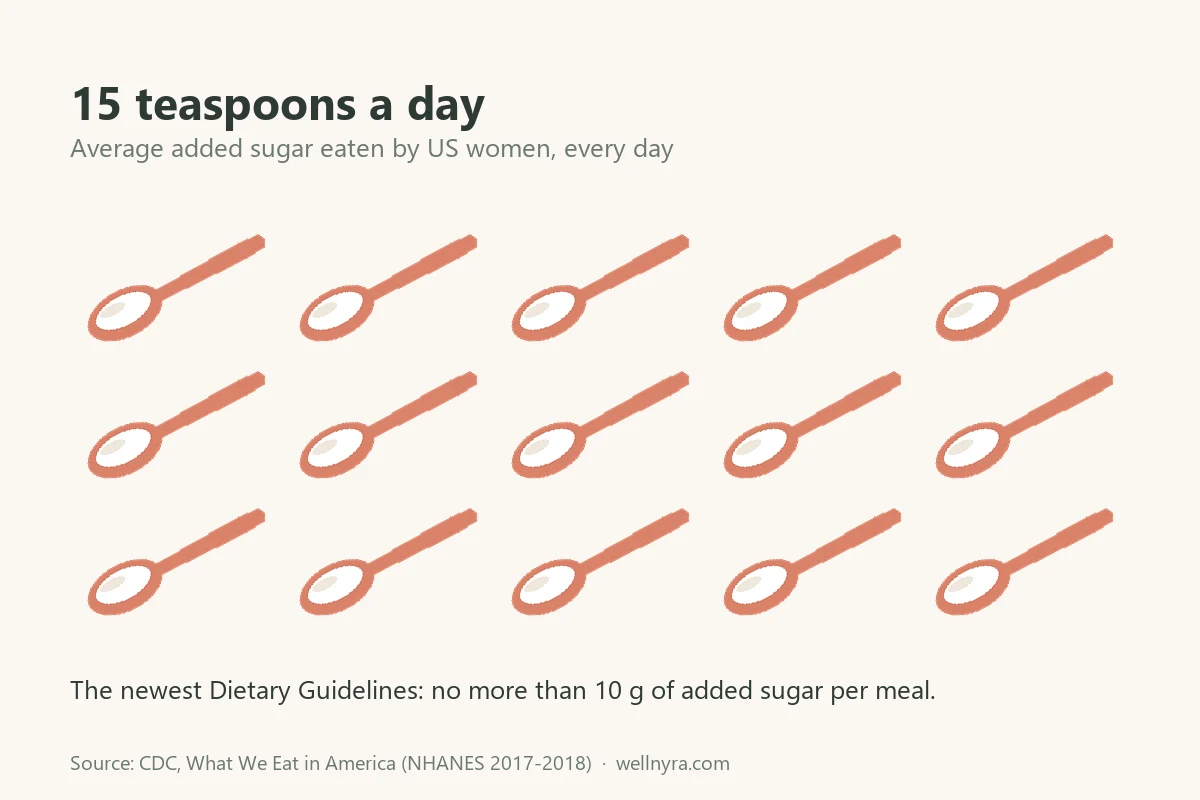
The average American woman eats about 15 teaspoons of added sugar a day, mostly from sugary drinks, desserts and sweet snacks. The latest Dietary Guidelines advise no more than 10 grams of added sugar per meal (CDC). Checking labels for "added sugars" for a week is eye-opening, and swapping one sugary drink a day is often the easiest win.
Have a plan for stress
Since stress-driven eating leans toward sweets, the best move is a buffer between the stress and the snack: a short walk, a few slow breaths, a call to a friend. If you still want the treat after that, have it and enjoy it.
6. Does hormone therapy help cravings?
We couldn't find good studies showing that hormone therapy reduces sugar cravings in women going through menopause. It's prescribed for symptoms like hot flashes, not for appetite. If night sweats are wrecking your sleep, though, treating them may help cravings indirectly, through better sleep. That's a conversation for your doctor.
7. Could it be diabetes or a thyroid problem?
Usually not, but it's worth knowing the signs. The CDC lists frequent urination, increased thirst and hunger, and fatigue among the symptoms of diabetes (CDC). If your cravings come with those, ask for a blood sugar test. The two common ones are:
A1C test
Your average blood sugar over the past 2 to 3 months. Below 5.7% is normal, 5.7% to 6.4% is prediabetes, 6.5% or higher is diabetes.
Fasting blood sugar
Taken after an overnight fast. 99 mg/dL or lower is normal, 100 to 125 is prediabetes, 126 or higher is diabetes.
Those ranges come from the CDC (CDC). An overactive thyroid can also cause weight loss despite an increased appetite, and it's more common in women (NIDDK). Both are simple blood tests.
Talk to your doctor if...
- Your cravings or hunger come with extra thirst, frequent urination or unusual tiredness.
- You're losing weight without trying, even though you're hungrier.
- You feel shaky, sweaty or confused when you go a few hours without eating.
- Eating feels out of control, or you often eat large amounts in one sitting and feel bad afterward.
- Night sweats or insomnia are disrupting your sleep most nights.
- You have diabetes or prediabetes and want to change how you eat.
Frequently asked questions about sugar cravings in menopause
References: Duval et al., Eur J Clin Nutr 2014 (MONET), Malo-Vintimilla et al., Br J Nutr 2023, Greer et al., Nat Commun 2013, Epel et al., Psychoneuroendocrinology 2001, Hoertel et al., Nutr J 2014, Ebrahim et al., Alcohol Clin Exp Res 2013, CDC: Added Sugars, CDC: Diabetes Symptoms, CDC: Diabetes Testing, NIDDK: Hyperthyroidism.
Keep reading on Wellnyra